
How to Choose a Wedding Decor Style for Your Venue
Use a venue-fit scorecard to shortlist wedding decor styles that work with the room, the light, the season, and the feeling you want.
To choose a wedding decor style for your venue, start with what the room will not let you change: its architecture, existing colors, light, layout, and rules. Score each possible style against those fixed features, your season and formality, and the mood you want. Shortlist the two strongest fits, then test both against the same venue photo before buying anything.
This reverses the usual process. Instead of falling in love with twenty unrelated images and trying to force them into one room, you let the venue narrow the options. The result may be less dramatic on a mood board. It is usually more coherent in real life.
Start with the venue before naming a style
A style label is useful only when it helps you make decisions. “Romantic,” “modern,” “boho,” and “rustic” can each describe hundreds of different rooms. Your venue is more specific.
Take a wide photo from the view guests will see first. Then write down:
- the dominant wall, floor, ceiling, and furniture colors;
- architectural features you want to keep visible;
- features you would rather soften;
- how much natural light the room gets at your event time;
- the shape and scale of the ceremony or reception area;
- what the venue already supplies;
- any restrictions on candles, attachments, draping, confetti, power, or setup.
Do not treat restrictions as a final admin check. A no-flame rule changes a candle-led style. A low ceiling changes oversized hanging installations. A short setup window changes anything that requires a small construction crew and a prayer.
WeddingWire’s guide to choosing wedding decor makes the same broad point: the venue type and surroundings should affect both the style and the amount of decor. The scorecard below turns that principle into an actual decision.
Use the six-part venue-fit scorecard
Choose three to five styles you genuinely like. Score each style from 0 to 2 across six factors:
- 0 — conflicts: the style fights the venue or requires expensive concealment;
- 1 — workable: it can fit, but needs careful choices or meaningful additions;
- 2 — natural fit: the venue already supplies part of the look.
1. Architecture
Does the style work with the room’s bones?
Exposed brick, timber beams, ornate plaster, industrial steel, a blank white marquee, and a formal ballroom each give you a different starting point. A style can create contrast, but the contrast should look deliberate. If every photo reference depends on hiding the venue, score it low.
2. Existing colors
Compare the permanent palette with the colors the style usually needs.
You do not need an exact match. You do need a relationship: harmony, controlled contrast, or a neutral bridge. Warm red brick and cool silver-blue decor can work, but probably not by accident. Flooring matters more than couples expect because it occupies so much of every wide photo.
3. Light
Score the style in the light guests will actually see.
Airy botanical decor that looks effortless at noon may disappear during an evening reception. Dark, candle-heavy decor can feel rich at night and unexpectedly heavy in a low room during the day. Check natural light, installed lighting, and what additional lighting the venue permits.
4. Season
Use the season as a material and atmosphere check, not a color rule.
Summer does not require pastels. Winter does not require burgundy. Ask whether the flowers, textiles, lighting, and outdoor elements make practical sense for the date and climate. Also check availability before a seasonal reference becomes a sourcing problem.
5. Formality
Does the decor support how the event is meant to feel?
Formality comes from the whole system: spacing, linens, paper, lighting, florals, table settings, dress, and service. One crystal object does not make a casual room formal. One wooden sign does not make a ballroom rustic.
6. Desired mood
Write the mood in plain language before scoring: intimate, bright, playful, calm, dramatic, garden-like, clean, or abundant.
This is the only factor that starts entirely with you, but it still has to survive the room. “Intimate” in a vast hall may require clustered lighting and tighter visual zones. “Airy” in a dark pub may require more than white flowers.
Add the six scores. A style can earn up to 12 points:
- 10–12: strong fit; test the details;
- 7–9: workable; identify the expensive or difficult gaps;
- 0–6: likely forcing the room; keep only if the tension is intentional and affordable.
The total is not a verdict. The low individual scores tell you where the trouble is.
A worked hypothetical example
This example is hypothetical. It is a planning exercise, not an authenticated NuptiaAI generation or a claim about what a specific venue permits.
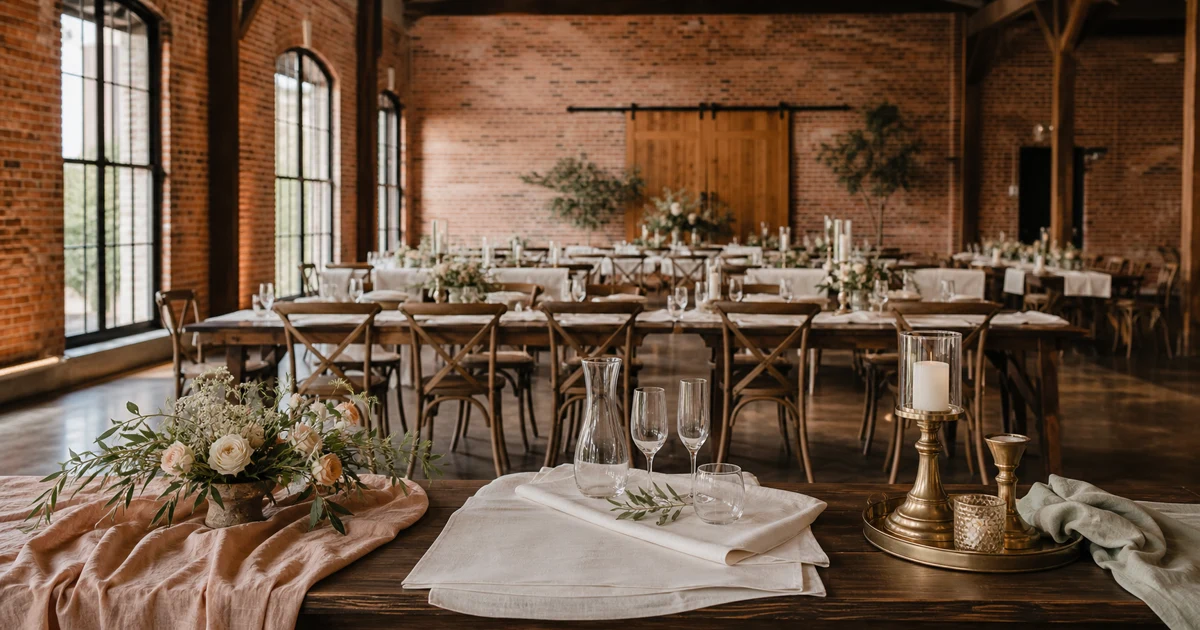
Imagine an October reception in a converted brick hall:
- warm red brick and black metal windows;
- medium-height timber ceiling;
- soft north-facing daylight, then warm installed lights;
- long wooden tables included;
- semi-formal dinner;
- desired mood: warm, intimate, and unfussy.
The couple is considering modern minimal, boho, and classic glamour.
| Factor | Modern minimal | Boho | Classic glamour |
|---|---|---|---|
| Architecture | 2 | 2 | 1 |
| Existing colors | 1 | 2 | 1 |
| Light | 2 | 2 | 1 |
| Season | 1 | 2 | 2 |
| Formality | 2 | 1 | 2 |
| Desired mood | 1 | 2 | 1 |
| Total | 9 | 11 | 8 |
Boho leads because natural texture, warm color, and softer arrangements work with what the hall already has. But “boho” is still too broad to buy from. The next step is to borrow only the useful parts: loose seasonal flowers, tactile linens, and warm pools of light. The couple can read the existing boho wedding decor guide for detail without assuming every macramé reference belongs in the room.
Modern minimal remains a credible second option. It would need a warmer palette and less severe styling to deliver the desired mood. Classic glamour scores lowest not because it is bad, but because reflective, highly formal references may require more transformation to feel native to this particular hall.
Turn the winning style into a short brief
Do not carry the whole inspiration board into the next step. Write a brief with five decisions:
- Style direction: the useful version of the label, such as “warm minimal” rather than simply “modern.”
- Three colors: one existing venue color, one main decor color, and one accent.
- Two materials: for example linen and aged brass, or glass and pale wood.
- One focal area: ceremony backdrop, head table, dance floor, or room entrance.
- One restraint: what you will deliberately not add.
That final restraint matters. A coherent room usually repeats a few choices instead of demonstrating every saved image.
If your shortlist includes rustic elements, use the rustic wedding venue decor guide to separate material choices from the generic “rustic” label.
Test two styles against the same venue photo
Once the scorecard leaves you with two strong options, compare them in the same image. Keep the viewpoint, event area, and broad layout consistent. Change one large variable at a time:
- palette first;
- then floral density;
- then lighting;
- then the focal installation.
This makes the comparison useful. If the camera angle, furniture, flowers, lighting, and architecture all change at once, you are comparing two fantasies rather than two decor choices.
An image is still a concept, not approval. Confirm dimensions, attachments, fire rules, power, stock, setup labor, and cost with the venue and suppliers before ordering.
How NuptiaAI can help with the shortlist
NuptiaAI is an iPhone wedding-venue visualizer. You can provide a photo of the ceremony or reception space, choose from the app’s current style library, and add colors, season, time, budget tier, flowers, and special requests.
Use it after the scorecard, not before. Test the two styles that already fit the room and keep the prompt grounded in what the venue allows. A result can help compare directions, but it does not guarantee exact architecture, measurements, stock, installation safety, or final cost.
The useful outcome is not a perfect rendering. It is a shorter conversation: “This warmer, lower-density direction fits the hall better than the cooler, highly formal option.”
Common questions about choosing a wedding decor style
Should the wedding style match the venue?
It should have a clear relationship with the venue. That can be harmony or deliberate contrast. Trouble starts when the style requires you to hide most of the room, replace everything the venue includes, or ignore the light and scale.
How many wedding decor styles should I compare?
Start with three to five, then score them. Take no more than two into detailed visual testing. Comparing ten fully developed concepts usually creates more decisions, not better evidence.
What if my partner and I like different styles?
Score both styles against the same venue and desired mood. Then look for the low-scoring factors rather than arguing about labels. One style may supply the palette while the other supplies the materials or level of formality.
Should colors or style come first?
Start with the venue and the feeling, then develop style and color together. Existing walls, flooring, furniture, and light are already part of the palette whether or not they appear on the mood board.
Browse the NuptiaAI wedding decor guides for deeper style and venue-planning help, then test only the directions your real room can support.