
How to decorate a wedding venue when you cannot hang anything
Use freestanding focal points, floor decor, tables, dividers, and approved lighting without turning a no-hanging venue rule into a new installation problem.
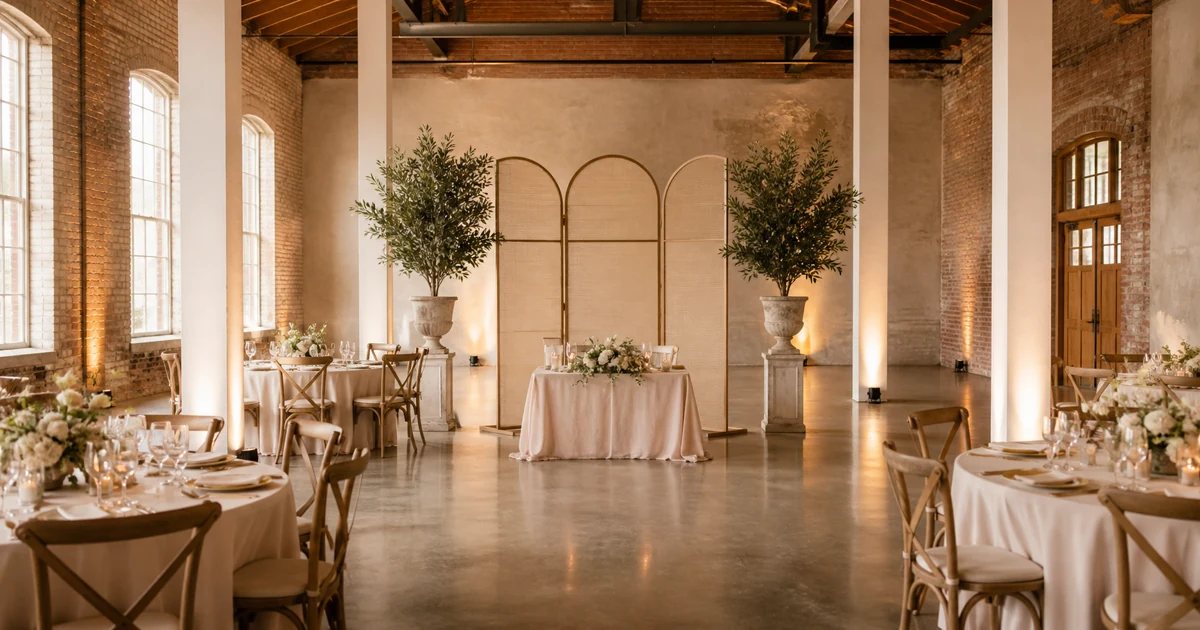
To decorate a wedding venue when you cannot hang anything, work from the floor and tables: use self-supporting focal points, floor-level decor, linens, table arrangements, freestanding dividers, and venue-approved lighting. First confirm the exact rule. Then check every item’s support, footprint, supplier, setup, removal, and effect on exits and accessible routes before ordering it.
The useful question is not, “What can replace ceiling drape?” It is, “What visual job was the hanging decor meant to do?” Height, warmth, color, a focal point, and a more intimate room can all come from elements that do not touch the building. But freestanding does not mean automatically permitted or safe. A large frame, powered light, tall planter, or self-supported drape system can still need written approval, a qualified supplier, and a realistic installation plan.
Confirm what “cannot hang” actually bans
Ask the venue to translate the short rule into surfaces and methods. Does it ban all contact with walls and ceilings, or only nails and adhesives? Are beams, windows, columns, doors, railings, chandeliers, sprinklers, and existing hooks also off-limits? Does leaning an object against a wall count as contact? Does a large freestanding installation still need review?
Do not treat a different attachment product as a clever escape hatch. If the rule says no hanging, removable hooks, tape, zip ties, wire, fishing line, and “we’ll only wrap it around the chandelier” all stay out unless the venue approves that exact method.
Two current venue policies show why the wording matters. Hidden Barn Venue requires advance approval for decor attached to walls, beams, ceilings, or structures and for major installations, including large floral structures and secured specialty backdrops. Lynnwood Event Center separately controls suspended banners, adhesive use, ladder work, decor rigging, and when outside-company decor must arrive and leave.
Those are examples, not default rules. Your contract, current policy, and authorized venue contact decide what applies to your event. Use the wedding venue decor restrictions checklist to record the source, approver, deadline, and design consequence instead of relying on a remembered “probably fine.”
Use the no-hanging decision tree
Run each idea through this order before it reaches a shopping cart or supplier brief.
- Does it touch the building? Include walls, ceiling, beams, windows, doors, columns, rails, lights, and other fixtures. If yes or unclear, stop and ask about the exact method.
- Can it support itself? If the concept depends on an invisible fixing, leaning surface, or improvised support, remove it or ask a qualified supplier to redesign it for venue review.
- Does it trigger another rule? Large structures, outside suppliers, powered items, flames, ladder work, water, or floor protection may need separate approval even when nothing hangs.
- Does it fit the working room? Check exits, accessible routes, service paths, door swings, aisles, guest sightlines, and the full base that a polished photo often crops out.
- Can the approved people install and remove it on time? Record delivery, assembly, any room move, teardown, collection, and one owner for each handoff.
Only after all five answers are clear does the item move into the plan. This is a planning filter, not a structural or safety assessment. The venue and responsible suppliers still decide whether a real item in a real position is acceptable.
Choose decor by how it stands
Instead of collecting a hundred “no-hanging wedding” pictures, shortlist by support method and visual job.
| If the room needs… | Explore… | Confirm before ordering… |
|---|---|---|
| A focal point | A supplier-designed freestanding backdrop, screen, arch, or frame | Dimensions, base, stability, footprint, installer, assembly, and written placement approval |
| Height | Floor-standing planters, trees, pedestals, columns, or display stands | Base or ballast information, sightlines, floor protection, movement, and supplier responsibility |
| Color and texture | Linens, runners, napkins, table objects, low arrangements, or approved chair details | Venue inventory, material and flame rules, quantities, setup, and cleanup |
| Clearer zones | Freestanding screens, low dividers, furniture groupings, or self-supported drape systems | Exits, accessible and service routes, dimensions, installer, and any fire requirements |
| Atmosphere | Venue-approved uplighting, table lighting, or the room’s installed lighting | Power, cable routes, controls, supplier, flame or heat rules, placement, and fees |
The last column is the important one. A photo of a freestanding backdrop tells you almost nothing about its base, weight, assembly, or space claim. Ask the supplier for dimensions and specifications, then place the full footprint on the venue layout.
Build one focal point from the floor
If hanging decor was meant to pull attention toward the ceremony or couple’s table, replace the visual job rather than the object. A self-supporting backdrop may do that. So might a pair of floor-standing arrangements, an existing window, a fireplace, or a carefully framed section of architecture that needs no added structure.
Keep the scene legible. One strong floor-supported anchor usually reads better than several unrelated frames competing around the room. If the venue already has a useful feature, spend less effort trying to manufacture another one.
Put height at the edges, not everywhere
Floor-standing planters, trees, pedestals, and tall arrangements can lift the eye without using the ceiling. They also occupy space at floor level, which inspiration photos are excellent at cropping out.
Mark the base and widest point on the layout. Check sightlines and routes. Ask who supplies, fills, moves, and removes each piece. A tall item that can be reused from ceremony to reception needs a confirmed destination, route, time, and mover; otherwise “reuse” is just a second setup job wearing a nice hat.
Let tables carry more of the room
When walls and ceilings stay bare, repeated table choices do more visual work. Linens, napkins, menus, table numbers, low arrangements, and permitted lighting can build color and rhythm across the room without another structure.
Do not compensate by piling every idea onto the table. Protect conversation, place settings, service, and the venue’s flame or material rules. Repetition is what ties the room together, not the number of objects per guest.
Define intimacy with zones
A large hall can feel warmer when its activities are easy to read. Furniture groupings, low freestanding dividers, screens, and a self-supported backdrop can separate arrival, dining, dancing, or a quiet seating area without touching the building.
Start with guest movement, then add the visual layer. The blank-canvas wedding venue guide includes a zone-priority method for deciding which areas deserve attention. Here, the extra rule is simple: every zone-making object has a floor footprint that must stay out of required routes.
Treat lighting as a supplier question
Lighting can change how much attention the bare walls receive, but it introduces a different set of constraints. Ask the venue what installed lighting can be adjusted and which outside lighting suppliers or equipment are allowed. For added lights, confirm power, cable routes, control, placement, setup, and fees. For any flame-based option, use only the venue’s current written rule.
An inspiration image cannot tell you whether a circuit is available, a cable route is acceptable, or the room will have the promised effect. Let the image set a direction. Let the venue and lighting supplier specify the real system.
Turn the shortlist into an approval brief
Send the venue a small number of concrete decisions, not a board full of maybes. For each item, include:
- a photo or supplier drawing;
- exact dimensions and the full base footprint;
- weight, ballast, or stability information supplied by the vendor where relevant;
- the room and exact position on the layout;
- confirmation that it does not attach to or lean on the building;
- power, flame, water, or floor-protection details;
- supplier, insurance, delivery, assembly, movement, removal, and collection;
- the exit, accessible-route, service-route, and door-clearance check;
- the decision needed and the date you need it.
Ask for an item-by-item written reply: approved, changes required, or declined. If the venue needs a supplier document or another reviewer, keep the item pending. Do not turn silence into permission because the rental deposit is due.
Audit a NuptiaAI concept for accidental attachments
NuptiaAI is an iPhone wedding-venue visualizer. A couple can submit a venue photo and include a special request such as “no wall, ceiling, beam, window, column, or fixture attachments; use only visibly self-supporting decor.”
That can help explore a direction, but the generated image is not an approval drawing. Compare it with the source photo and mark each question clear, invented or changed, or cannot tell:
- Is any fabric, greenery, light, sign, or floral piece attached to the room?
- Does anything float without a visible self-supporting base?
- Has the image invented hooks, rails, rigging points, outlets, or supports?
- Are the full bases and footprints of tall items visible?
- Did an exit, door, aisle, accessible route, service path, or fixed venue feature move or disappear?
- Did the concept add a flame, cable, large structure, water, or ballast that needs separate review?
- Could the approved team deliver, assemble, move, and remove the idea inside the access window?
Anything marked invented or changed or cannot tell stays out of the approved plan until the venue and responsible supplier resolve it with real specifications. NuptiaAI cannot confirm permission, dimensions, stability, access, installation, electricity, fire rules, supplier availability, or final cost.
Frequently asked questions
What can I use instead of hanging wedding decorations?
Use decor that genuinely supports itself: freestanding focal structures, floor-standing planters or pedestals, table textiles and arrangements, furniture groupings, low dividers, and venue-approved lighting. Choose by the job the hanging decor was meant to do, then confirm the real item’s footprint, support, supplier, setup, and removal.
Does freestanding decor need venue approval?
It can. A venue may review major installations, outside suppliers, tall or powered items, flames, floor protection, routes, or setup regardless of whether the object attaches to the building. Send the exact item, specifications, position, and installation plan to the authorized venue contact.
Can I use removable hooks if the venue says no hanging?
Not unless the venue approves that exact hook, surface, item, and removal method. “Removable” is a product description, not venue permission. A strict no-hanging rule may prohibit adhesives and all contact, while another venue may allow only named methods on named surfaces.
Can an AI visualization show whether freestanding decor is safe?
No. It can help you compare a concept in the room, but it cannot verify the base, stability, structural design, real dimensions, routes, power, flame rules, or installation. Use the image to discuss visual direction, then use supplier specifications, the current venue layout, and written approval for the physical plan.
Use the NuptiaAI wedding decor guides to shape the visual direction, then keep the approved no-hanging brief beside every concept image and supplier handoff.