
Should You Rent or Buy Wedding Decor? Compare the Real Work
Decide whether to rent, buy, borrow, DIY, or skip each wedding decor item by comparing the full cost, logistics, labor, and after-wedding plan.
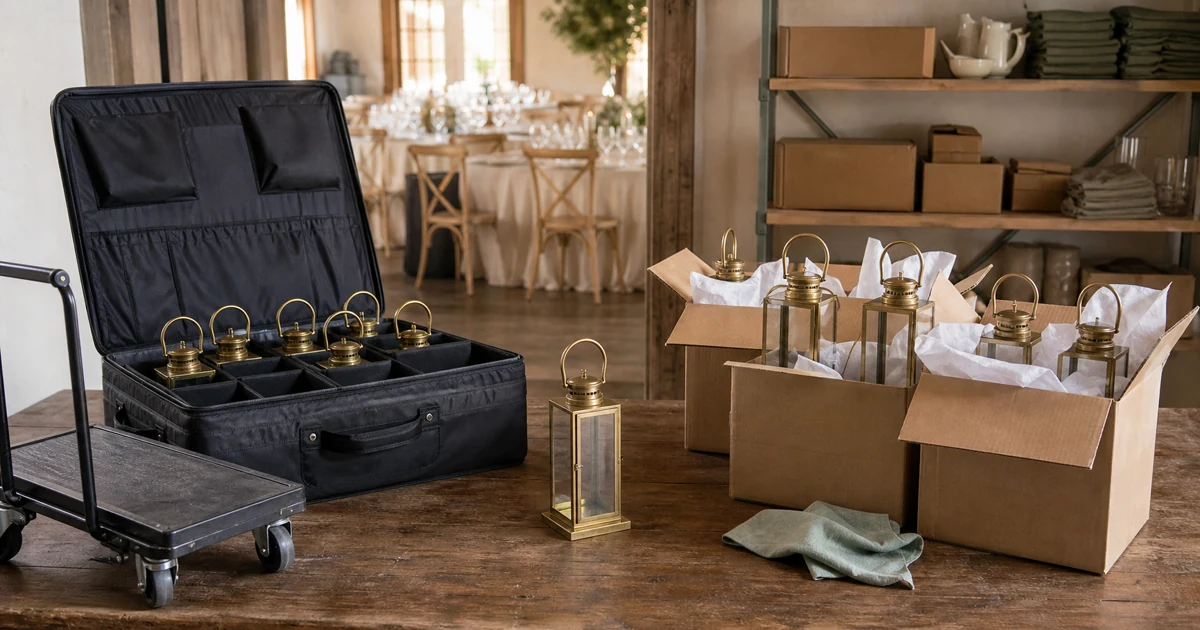
Rent wedding decor when the item is needed once, is awkward to transport or store, or comes with valuable delivery, setup, and pickup. Buy when the real quantity and specification are cheaper after labor and logistics, and there is a credible use or disposal plan afterward. Borrow or DIY only when permission, condition, materials, transport, setup, and return work are genuinely covered. Compare each item separately; a hybrid plan is usually more useful than one rule for the whole wedding.
The shelf price and the rental quote are only the visible numbers. The real decision includes who finds the item, where it waits before the wedding, how it reaches the venue, who sets it up, what happens if it breaks, and who still wants to deal with it the next morning. Once those jobs are written down, a surprisingly cheap purchase can become a bad plan, while a rental that looked expensive can be buying back an entire chain of work. The reverse can also be true when a rental includes very little beyond temporary possession.
Decide item by item
Do not apply one sourcing rule to the whole wedding. “We are renting the decor” and “we are buying everything and selling it afterward” are tidy sentences, but they hide differences between objects.
Twelve table numbers, 120 napkins, a ceremony frame, three lounge sofas, and one welcome sign do not have the same quantity, storage needs, setup risk, or life after the wedding. The right source for one says little about the next.
Reventals’ current rent-versus-buy guide reaches a similar broad conclusion: a balanced approach can make more sense than buying or renting every category. Its rental guidance also tells readers to check delivery and pickup schedules, damage terms, venue restrictions, setup access, and the day-of contact. Those details belong inside the comparison, not in the small print after the decision.
Start by checking what the venue and existing supplier scopes already include. There is no reason to rent a stand, easel, candle holder, table, or linen that is already in the current package in the right quantity and condition. Use the wedding venue decor checklist to record the source of every included item instead of relying on “I think the coordinator mentioned it.”
Define the item before comparing options
Before comparing options, hold the requirement still. Write down:
- the venue zone and the job the item must do;
- the exact quantity;
- dimensions, material, color, finish, and acceptable condition;
- delivery, setup, and removal deadlines;
- venue restrictions or written approval;
- an acceptable substitute;
- whether the item must be identical or can be mixed.
Ask for options against that same brief. A rental quote for twelve delivered, cleaned lanterns is not directly comparable with a listing for ten used lanterns collected from two addresses. Neither is automatically better; they are different packages of money and work.
Check the rules before becoming attached to a sourcing method. A bought frame still needs permission, a safe support method, transport, assembly, and removal. A rental supplier may still need an approved access slot and may offer curbside delivery rather than placement. Work through the wedding venue decor restrictions checklist before paying a non-refundable amount.
Compare total effort instead of sticker price
For each item, place five options side by side: rent, buy new or used, borrow, DIY, and omit. Keep the last column. Sometimes the sensible answer for a low-impact object is to stop sourcing it.
Money that is actually committed
Record the base amount, taxes, mandatory fees, delivery or collection, setup, teardown, cleaning, packaging, transport, tools, test materials, and expected non-refundable costs. Keep refundable deposits separate so the cash requirement remains visible without pretending the money is certainly lost.
Treat a possible resale as uncertain recovery, not as a discount already earned. Inside Weddings’ rent-or-buy discussion points out that resale also needs cleaning, packaging, time, and a buyer, while ownership needs space. Write a possible sale amount on its own line and leave it out of the working budget until the sale exists.
Work and responsibility
Count the handoffs:
- source or reserve;
- receive or collect;
- inspect and test;
- prepare, clean, or assemble;
- transport to the venue;
- set up;
- move during the event if needed;
- remove;
- clean again;
- return, store, reuse, donate, or sell.
Give each required handoff a permitted method, a realistic time, and one owner. “Family will help” is not an owner. “We can probably fit it in a car” is not a transport plan. A cheaper option with an impossible load-in window is not cheaper; it is incomplete.
Risk and flexibility
Record what happens if the quantity changes, an item arrives damaged, the venue rejects the setup method, the pickup is late, or the design direction changes. For rentals, read the current agreement for damage, loss, cancellation, substitution, pickup, and cleaning terms. For purchases and borrowed pieces, decide who absorbs breakage and whether replacements can be sourced in time.
Do not force every risk into a dollar amount unless there is a real one. Leave it marked as unresolved. That is more useful than hiding uncertainty inside a confident total.
When each option tends to win
These are filters, not universal category rules.
Rent when logistics are part of the value
Renting becomes stronger when the item is bulky, needed in a large matching quantity, difficult to clean or store, or useful only for one day. It can also win when the supplier’s confirmed scope removes delivery, placement, teardown, and pickup work.
Confirm those inclusions. A rental logo on the quote does not mean every handoff is covered.
Buy when ownership has a real next use
Buying becomes stronger when the required item is hard to rent locally, the purchase meets the exact brief at the needed quantity, and the transport and setup are manageable. It also makes sense when you would genuinely use the item at home or for another confirmed event.
“We can sell it” is not the same as a next use. If resale is the plan, record who will clean, photograph, list, store, answer messages, and meet the buyer.
Borrow when the relationship can carry the agreement
Borrowing can work for a small number of suitable items with clear permission, condition, collection, return, cleaning, and replacement expectations. It is not free if it requires three weekend drives or leaves a friend wondering who damaged the family heirloom.
Photograph condition at collection and return. Agree on whether normal wear is acceptable and what happens if an item cannot be returned in the same state.
DIY when making is the point or the process is controlled
DIY can win when the design is simple, materials are testable, the quantity is realistic, and the people doing the work actually want the project. Build one complete sample before buying for the full quantity. Time the sample, include failed materials and tools, and decide where the finished pieces will dry, wait, and travel.
A tutorial is evidence that an object can be made. It is not evidence that making 80 of them fits your month.
Omit when the item has no clear job
If an item is optional, low-impact, duplicated by the venue, or expensive to source safely, remove it from the plan and look at the room again. The wedding decor budget guide can help rank which choices actually change the venue before you spend time optimizing how to acquire them.
Work through an illustrative arithmetic example
The numbers below are hypothetical. They are not current market prices, a supplier quote, customer data, or a claim about what anyone will save.
Imagine the same defined requirement: 12 matching table lanterns. The venue permits the lanterns on tables, while the candle or light source still needs separate confirmation.
The illustrative rent option is $144 for the lanterns, $70 for delivery and pickup, and an $18 mandatory fee: $232 committed. Setup is not included, so someone still has to inspect and place them.
The illustrative used-purchase option is $108 for the lanterns, $24 for two collection trips, $15 for cleaning materials and replacement parts, and $10 for packaging after the wedding: $157 committed before any resale. The couple would also collect, inspect, clean, store, transport, place, remove, clean again, list, and meet a buyer.
The difference in committed money is:
$232 - $157 = $75
The used-purchase option’s committed-money line is $75 lower inside this invented example. That does not settle the decision. If the extra trips, cleaning, storage, listing, and buyer handoff do not have time and owners, the option does not work. A possible $72 resale can be recorded separately, but it should not be deducted before a buyer pays.
The accompanying worksheet preserves the complete rent, buy, borrow, DIY, and omit comparison. Repeat it for every meaningful item rather than carrying the lantern result into unrelated categories.
Build a hybrid decor plan
Once each item has a preferred method, look across the whole plan. This is where individually reasonable choices can collide.
Two rentals from different suppliers may each be sensible on their own but come with separate delivery fees or incompatible pickup windows. Five small purchases may fit the budget but not the available storage. Three DIY projects may be manageable separately but all demand the same final weekend.
Build one master view with:
- item and sourcing method;
- committed money;
- unresolved amount or term;
- storage location;
- delivery or collection window;
- setup owner;
- removal owner;
- post-wedding destination.
Remove or change options until the combined plan fits the venue window and the people available. A hybrid plan might rent the bulky matching pieces, buy a small personalized object that will be kept, borrow a few robust accents, make one repeatable detail, and omit the rest. The exact mix matters less than whether every row is honest.
Where NuptiaAI fits
NuptiaAI is an iPhone wedding-venue visualizer. It can use a ceremony or reception photo with style, colors, event details, season, time, budget tier, flowers, and special requests to create a concept image.
Use it before sourcing to compare a small number of directions in the real venue photo. If one version relies on twelve lanterns and another relies on one stronger focal piece, the comparison can help decide which item briefs are worth taking to venues and suppliers.
The image cannot tell you what to rent or buy. It does not confirm prices, stock, quantity, dimensions, material, venue permission, delivery, setup, safety, resale, or total cost. Generated details can also change or invent parts of a room. Check the concept against the source photo, then move only the kept items into the worksheet and current supplier conversations.
Frequently asked questions
Is it cheaper to rent or buy wedding decor?
It depends on the exact item, quantity, and included work. Compare committed money for the same specification, then add delivery, collection, setup, cleaning, transport, storage, and post-wedding labor. Keep possible resale separate. The lower shelf price does not win when the surrounding plan is incomplete.
What wedding decor is usually worth renting?
Renting often deserves a closer look for bulky pieces, large matching quantities, items needed once, and objects that are difficult to transport, clean, or store. It is strongest when the written scope also covers valuable logistics. Check the real quote because delivery, setup, teardown, and pickup are not automatic.
Should I buy wedding decor and sell it afterward?
Buy only if the purchase works before resale. Treat a later sale as uncertain: condition, demand, timing, price, storage, cleaning, packaging, messages, and buyer collection all affect the outcome. Record possible net resale separately and assign the work.
Does DIY wedding decor always save money?
No. Build and time one complete sample, then include materials, tools, failed attempts, storage, transport, setup, removal, and cleanup for the full quantity. DIY can be worthwhile when the process is controlled or making the item matters to you, but the tutorial price is not the total project.
Use the NuptiaAI wedding decor guides to narrow the visual plan, then put every kept item into the same comparison before paying a deposit or filling the spare room with boxes.