
Wedding Decor Ideas Without Flowers: Build a Complete Room
Plan a flower-free wedding by replacing the visual jobs flowers usually do, then map fabric, lighting, paper, objects, and venue features to each zone.
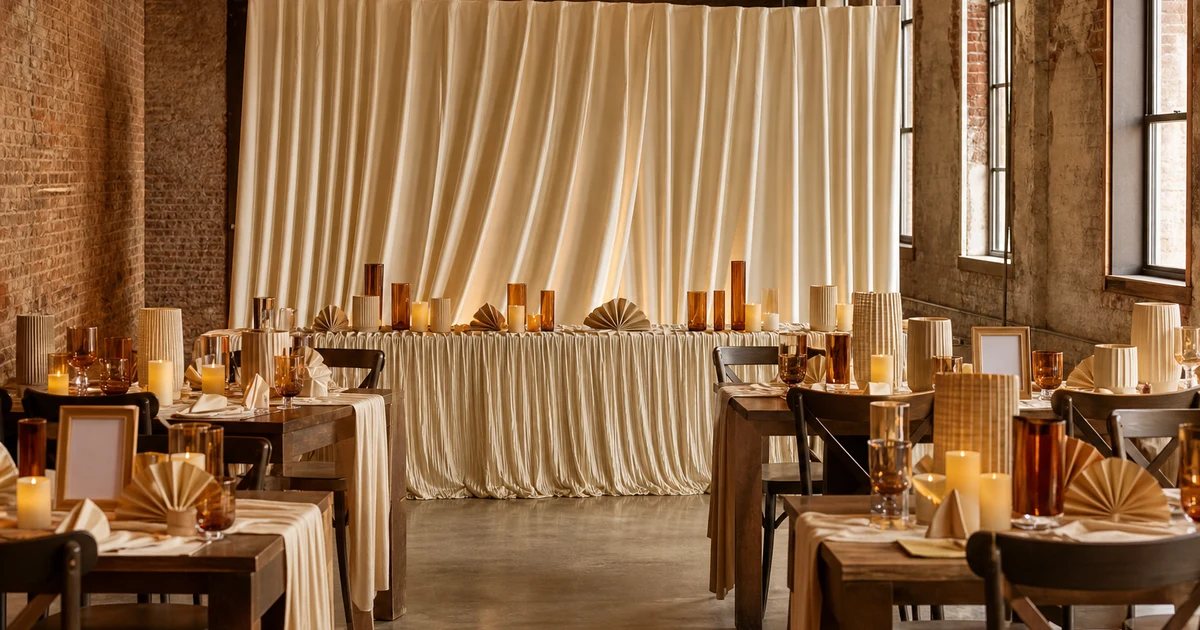
Decorate a wedding without flowers by replacing the visual jobs flowers usually perform, not by finding fake bouquets. Decide whether each venue zone needs a focal point, height, softness, color, texture, repetition, wayfinding, or atmosphere. Then use a restrained mix of fabric, paper, lighting, glass, books, fruit, ribbons, furniture, signs, or meaningful objects. Let strong architecture do some of the work, and confirm venue rules before ordering or installing anything.
A flower-free wedding can still look complete because flowers are one medium, not the plan itself. The useful question is what a bouquet, arch arrangement, or centerpiece was meant to do in that particular place. Once the job is clear, you can choose a non-floral material that suits the room—or decide that the venue already provides enough color, scale, or visual interest. The result is usually more coherent than swapping every expected arrangement for a different object.
Replace the job, not the bouquet
Search results for this topic are full of objects. The Knot’s current non-floral centerpiece guide, for example, includes lanterns, books, decorative objects, fruit, paper, glass, wood, and plant material. That is useful inspiration, but a whole venue needs a selection method as well as a gallery.
Start with this decor-by-job matrix. The alternatives are directions to explore, not universal recommendations; each one still needs to fit the venue and the real installation plan.
| Visual job | Flower-free directions | The decision to make |
|---|---|---|
| Focal point | Draped fabric, folding screens, framed art, sculptural objects, furniture, existing architecture or a view | Does this area need a new anchor, or is the room already doing the job? |
| Height and scale | Lanterns, tall holders with an allowed light source, pedestals with objects, floor-standing fabric, vertical paper forms | Can the item stand, fit, and be installed by an approved method? |
| Softness and movement | Gathered fabric, ribbons, tassels, layered linens, paper streamers | Will the material soften the room without creating a new attachment or access problem? |
| Color | Linens, napkins, paper, glassware, lighting, painted objects, furniture | Has the color been checked in the actual room light and on a real sample? |
| Texture | Woven runners, wood, ceramic, glass, metal, folded paper, books, personal objects | Does the texture help the chosen style, and can it survive handling and cleanup? |
| Repetition | Candleholders, lanterns, table numbers, ribbons, repeated vessels, framed photographs | Is the quantity realistic to source, place, remove, and store? |
| Wayfinding | Clear signs, fabric markers, repeated symbols, furniture placement, permitted lights | Can guests read it and move through the area comfortably? |
| Atmosphere | Venue-approved candles or flameless lights, supplier-installed lighting, table lamps, reflective glass, fabric, negative space | What are the flame, power, cable, access, and supplier rules? |
This changes the shopping question. Instead of asking what can replace flowers everywhere, ask what the ceremony focal area needs that the dining tables do not.
Define what flower-free means for this wedding
“No flowers” can mean four different things:
- no fresh-cut flowers;
- no fresh or dried cut flowers;
- no flower-shaped decor, including artificial and printed blooms;
- no botanicals at all, including foliage, plants, branches, moss, and fruit.
Choose the boundary before saving ideas or contacting suppliers. Otherwise a supposedly flower-free plan can quietly fill up with faux stems, dried seed heads, floral-print linens, paper flowers, and flower-shaped ceramics.
The distinction matters for generated images too. A prompt that says only “no flowers” may still produce floral motifs on fabric or a vase of dried stems in the background. Write the exclusions literally: “no fresh, dried, artificial, sculpted, or printed flowers,” for example. If foliage or potted plants are acceptable, say that separately.
Map flower-free ideas to each venue zone
Wedding-planning discussions about skipping flowers often turn on the room itself. In one current ceremony discussion, couples repeatedly distinguished venues with enough architecture or scenery from spaces that needed a focal point or softening. That is intent evidence, not a design rule, but it identifies the right first question: what is already working?
Walk through the day by zone. Leave the decor column empty when an existing view, fireplace, window, staircase, bar, or piece of furniture already performs the job.
| Zone | Likely job to assess | Flower-free directions to shortlist |
|---|---|---|
| Arrival | Wayfinding and first hint of the visual language | A clear sign, colored fabric marker, lanterns, a furniture vignette, one repeated symbol |
| Ceremony focal area | Focus, scale, softness | Existing architecture, a freestanding fabric backdrop, screens, framed art, pedestals with objects |
| Aisle | Rhythm without narrowing the path | Chair ribbons, fabric details, lanterns or permitted lights at selected points, or no added decor |
| Cocktail area | Identity and navigation | Venue furniture, menu or bar signs, table linens, lamps, personal objects, a repeated paper detail |
| Dining tables | Texture, repetition, comfortable scale | Candles or flameless lights, glass, fruit, books, ceramic objects, folded paper, textured runners |
| Couple’s table or reception focal point | A visual anchor distinct from guest tables | A stronger textile treatment, lighting, screens, furniture, or one sculptural object |
| Lounge, cake, bar, or activity area | Zoning | Rugs where permitted, furniture grouping, table lamps, screens, signs, color blocks |
| Evening and exit | Atmosphere and movement | Supplier-approved lighting, lanterns, reflective materials, clear directional signs |
Keep table details proportionate to the search intent here. A low arrangement may protect conversation, but the actual dimensions, flame source, food contact, stability, and table space belong in the supplier plan, not in a mood board.
If the venue is genuinely sparse, use the blank-canvas wedding venue guide to rank which zones deserve attention before you start assigning objects.
Build a coherent plan instead of an object collection
For each zone you decide to decorate, try this sequence:
- Choose one anchor that tells guests where to look.
- Add one repeated layer that creates rhythm across the zone.
- Add one atmosphere layer through light, fabric, material, or intentional empty space.
Treat that sequence as an upper bound. A ceremony in front of a strong window view may need only fabric on the chairs. A plain reception room may need a clearer focal point, repeated table detail, and controlled lighting. Both can be complete plans.
Repeat materials rather than collecting unrelated alternatives. If amber glass and pleated fabric define the ceremony, let one of them return at dinner. If books or framed photographs are personal to the couple, use them where guests can actually see them instead of turning every surface into a separate display.
Also decide what happens after the wedding. Reuse can be sensible, but only when the second location, move time, route, and owner are named. “Move the lanterns later” is not a handoff plan.
Confirm the physical plan with the venue
Non-floral materials bring their own venue questions. Fabric may need an attachment method. Candles need a current flame answer. Lamps and lighting need power and cable routes. Tall or freestanding objects need real dimensions, bases, access, setup, and removal.
Use the wedding venue decor restrictions checklist to record attachments, flame, power, access, labor, included inventory, cleanup, outdoor use, and written approval. If nothing may hang, the no-hanging wedding venue guide keeps that constraint separate from the flower-free decision.
Do not infer approval from an inspiration photo. Send the venue or supplier the exact item, location, dimensions, support or attachment method, flame or power details, installer, setup time, and removal owner.
Audit a generated concept for accidental flowers
An AI image can follow the overall direction and still slip flowers back into small details. Inspect the full image and close crops before treating it as a flower-free reference.
Check for:
- fresh bouquets, loose blooms, petals, or garlands;
- dried flowers, seed heads, pampas, or flower-like grasses when excluded;
- artificial, paper, fabric, ceramic, or sculpted flowers;
- floral prints on linens, signs, stationery, walls, rugs, or clothing;
- flower-shaped details hidden in table objects, lighting, or background art;
- foliage, branches, moss, plants, or fruit that cross the boundary you chose.
Then run a separate physical-reality audit. Compare the result with the source photo. Did doors, windows, stairs, exits, aisles, or fixed furniture move? Did the image invent a ceiling fixing, wall hook, cable, outlet, flame, or freestanding structure? Those are pending questions, not approved details.
Where NuptiaAI fits
NuptiaAI is an iPhone wedding-venue visualizer. Its current generation input includes a venue photo, colors, style, event details, season, time, budget tier, a flower selection, and special requests.
For a flower-free concept, leave the flower selection empty and put the exact boundary in the special request. Compare one controlled direction at a time, such as “no botanicals; use pleated fabric, amber glass, and warm permitted lighting,” rather than asking for every alternative in one image.
Treat the result as a visual hypothesis. NuptiaAI cannot guarantee that a generated concept contains no floral form, and it cannot confirm dimensions, attachments, flame rules, power, accessibility, installation, materials, supplier availability, venue approval, or cost. Audit the image, then turn only the kept ideas into a real supplier and venue brief.
Frequently asked questions
Can a wedding look complete without flowers?
Yes. A room feels complete when its important zones have clear focal points, useful visual rhythm, and a coherent material and color direction. Flowers can perform those jobs, but fabric, lighting, paper, furniture, glass, art, signs, personal objects, or the venue itself can perform them too. Do not add an alternative where the room already has enough character.
What can I use instead of flowers for wedding centerpieces?
Consider permitted candles or flameless lights, lanterns, glass vessels, fruit, books, ceramic objects, folded paper, framed photographs, textured runners, or a deliberately clear table. Choose for the job and the table: atmosphere, color, texture, or personal meaning. Then confirm dimensions, sightlines, stability, flame rules, food contact, setup, and removal with the responsible venue or supplier.
How do I decorate a wedding arch without flowers?
First decide whether you need an arch at all. Existing architecture, a window, a view, screens, framed art, or a furniture arrangement may create the focal point. If you use a freestanding frame or fabric treatment, confirm its base, dimensions, material, attachment method, wind or indoor conditions, installer, access, and removal in writing.
Can an AI visualization guarantee a flower-free design?
No. It can help compare a direction, but it may add fresh, dried, artificial, sculpted, or printed flowers in small details. State the exact exclusion in the prompt and audit the full image at close range. The image also cannot approve the physical installation or verify venue rules.
Use the NuptiaAI wedding decor guides to shape the visual direction, then keep the flower-free definition and venue approvals beside every concept and supplier brief.